Animal removal from a chimney addresses a real hazard: a nest or a trapped animal blocks the flue, and a blocked flue forces smoke and carbon monoxide back into the room. Birds, chimney swifts in particular, build in…
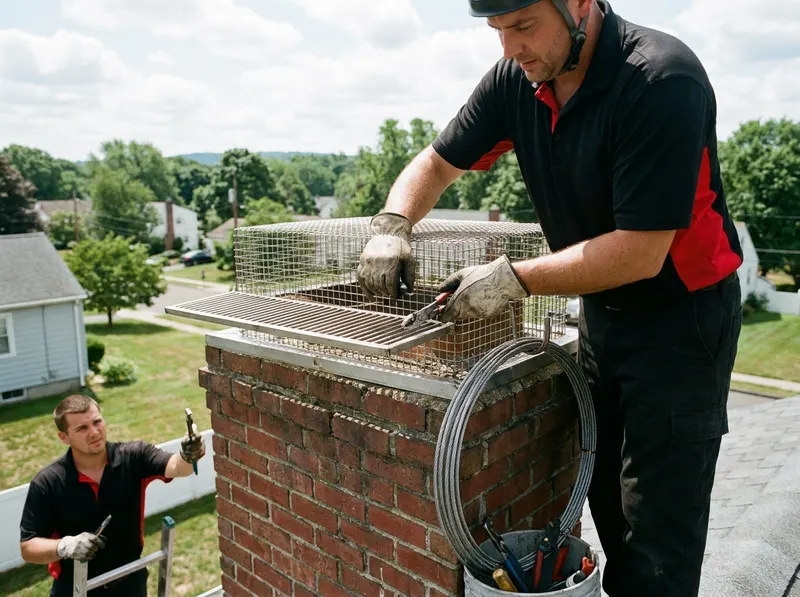
Animal removal from a chimney addresses a real hazard: a nest or a trapped animal blocks the flue, and a blocked flue forces smoke and carbon monoxide back into the room. Birds, chimney swifts in particular, build in uncapped flues across the West Side and Hanover, and raccoons den in wider clay flues on older Broad Street and East Side homes. The first step is to identify what is in the chimney and where. A camera or mirror inspection determines whether an animal is live and reachable, whether it has died in the flue, or whether the obstruction is an abandoned nest. Live animals are removed by hand or trap; nests and debris are pulled from the smoke shelf and firebox and hauled away. After removal, the flue gets a cleanout so the passage is fully open before any fire is lit.
The fix that keeps the problem from repeating is a chimney cap or animal guard. A custom 316 stainless mesh animal spark arrestor is the standard recommendation: 316-grade stainless resists the salt and moisture that pit cheaper 304 or galvanized caps, and the mesh both keeps animals out and catches embers, satisfying the spark-arrestor screen sizing referenced in NFPA 211. Off-the-shelf caps fit common flue sizes; a custom guard is fabricated when a flue is oversized, oval, or set on an unusual crown, common on the century-plus homes near Solomon Goffe House and around Silver City. To keep raccoons out of a chimney specifically, the cap must be bolted or clamped, not friction-fit, because raccoons are strong enough to pry a loose cap off.
Decision-fit comes down to what is in the flue and the season. If a single bird is trapped and the nest is small, one visit removes the bird, clears the nest, and the cap goes on the same day. If it is nesting season and chicks are present, chimney swifts are federally protected under the Migratory Bird Treaty Act and cannot be removed until they fledge, in that case the safe path is to stop using the fireplace, wait out the nest, then clean out the chimney and cap it. If a raccoon has denned with kits, removal waits until they are mobile. If the flue is oversized or the crown is cracked, a custom guard fits where a stock cap will not, and a Level 2 inspection is worth adding when a nest fire or heavy creosote is suspected. A free on-site estimate confirms the flue dimensions, the animal situation, and which cap fits before anything is ordered.
Every removal in Meriden, from Bradley Oaks and Chamberlain Heights to Yale Acres and South Meriden, includes a plain-English report of what was found in the flue and photos of the condition, following the Chimney Safety Institute of America (CSIA) inspection framework. That report shows the flue clear and the cap seated, so the fireplace can be used with the obstruction and re-entry point both resolved. Homeowners comparing options can get some quotes; the numbers above are market-range ballparks confirmed at the visit.
Every job gets a firm, written price after a free on-site visit.
Tell us about your animal removal & spark arrestor job in Meriden and we'll send a clear, written quote, usually the same day.
 Sootsquad Chimney Sweep